
Most of us never think about what happens to research after it’s done. A scientist runs an experiment, a team builds a piece of software, a study gets written up — and then much of it disappears behind a paywall, locked away from the very public whose taxes paid for it. If you’ve ever hit a “purchase access for €35” wall while trying to read a study, you’ve felt the problem first-hand.
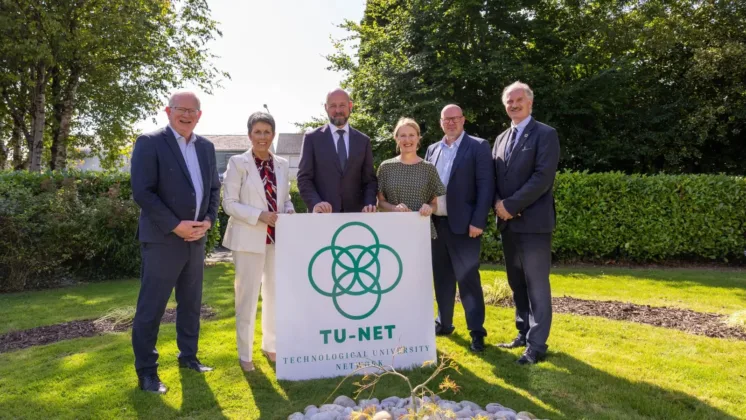
Ireland’s five technological universities have decided that needs to change. Together, TU Dublin, TUS, MTU, SETU and ATU have launched TU-NET, a joint initiative to make publicly funded research genuinely open — reproducible, discoverable, and free for anyone to read.
What is TU-NET, and why does it matter?
TU-NET is a partnership between the research offices and libraries of all five technological universities. Its goal is simple to state and ambitious to deliver: advance excellence in Open Research and put taxpayer-funded work back in the hands of the public, at no extra cost.
It also feeds into a national target — that by 2030, 100% of research funded by Irish taxpayers should be freely available to everyone. Right now, a great deal of it isn’t. Without a personal subscription or an institutional login, much publicly funded research stays out of reach.
The initiative was launched on 8 September 2023 at TUS’s Athlone campus by Professor Philip Nolan, Director General of Science Foundation Ireland. To mark the occasion, the presidents of all five universities signed a first-of-its-kind joint statement — a public commitment to shared, ambitious goals for research.
More than just academic papers
Here’s something that often gets overlooked: a huge amount of valuable research never appears in a traditional journal at all. In the TU sector, as much as 75% of research output is applied work — software, datasets, near-to-market innovations — the kind of practical research that solves real problems but doesn’t fit neatly into a paper.
That work has real impact, yet it can be hard to find and even harder to build on. By improving how this research is shared, TU-NET aims to make it far easier for other researchers, in Ireland and around the world, to discover these outputs and put them to use.
The next step: open data, not just open papers
Open Research isn’t only about who can read a study. It’s about whether others can actually reproduce it — the gold standard of good science. Under new EU rules, researchers must now publish not just their findings but the underlying data too.
To support that, TU-NET began rolling out a new data management planning solution in 2024, serving as a national case study for the Horizon Europe OSTrails project. In plain terms: a proper home for the data behind the research.
A shared commitment
Welcoming the launch, ATU President Dr Orla Flynn captured the spirit of it: “The journey ahead is one of openness, innovation, and collaboration, and we are excited to pave the way for a more inclusive and accessible research landscape.”
TU-NET’s Chair, Frances Madden of TU Dublin, put the ambition plainly: “TU-NET’s ambition is for every researcher, staff and student, in Irish technological universities to conduct their research with the highest standards of research integrity and reproducibility.”
The group has an ambitious agenda ahead and is seeking funding to build further Open Research capacity across the sector through shared training, resources and infrastructure. It’s early days — but the direction is clear: research that’s paid for by the public should belong to the public.
Read the full TU-NET Open Research Statement.